
What Holistic Education in Singapore Actually Looks Like Day to Day
- Education
Rhoda Howton
- 0
- 7 minutes read
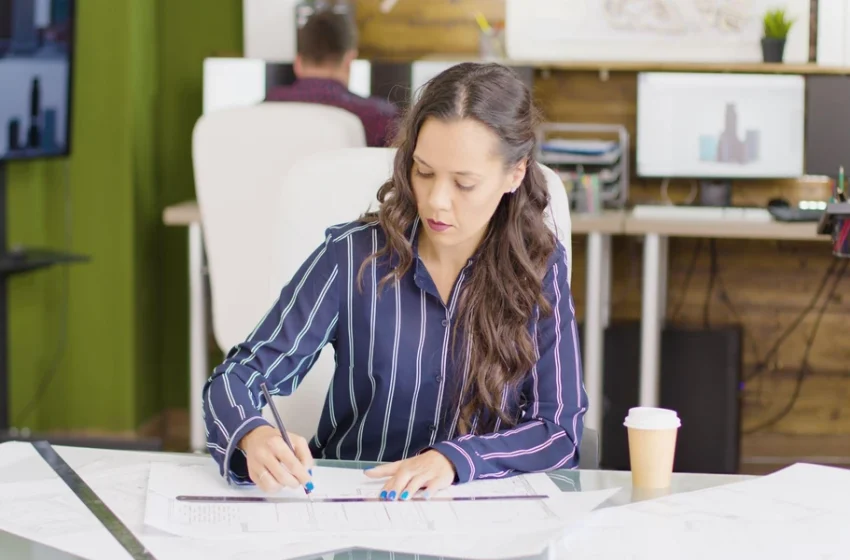
Image Recommendation: A student working independently at a desk with a personalised workbook and goal chart, a supervisor quietly checking progress nearby rather than lecturing to a full class.
“Holistic education” gets attached to almost any school that offers more than exam drilling, a few enrichment clubs, a wellness talk once a term, a mentoring period bolted onto an otherwise ordinary timetable. None of that is wrong exactly, but it treats the whole-child idea as an add-on to the real curriculum, rather than something built into how the curriculum actually runs.
The Difference Between Adding Programmes and Changing the Structure
A school can hold assemblies on resilience, run a leadership camp, and still organise every academic hour around one fixed pace for an entire class. That’s enrichment layered onto a conventional structure. A genuinely different model changes the structure itself, so that character, responsibility, and academic progress are not separate tracks running in parallel but outcomes of the same daily routine.
What an Individualised, Mastery-Paced Model Looks Like in Practice
| Fixed-timetable model | Individualised, self-paced model | |
| Pace | Set by the class as a group | Set by each student’s own mastery of the material |
| Where character fits in | Usually a separate programme alongside academics | Built into the daily structure of academic work itself |
| How progress is measured | Mostly by age or grade level | By demonstrated mastery of each unit of work |
Why Pace Is the Lever That Changes Everything Else
Once a student progresses by demonstrated mastery rather than by age or term, a few things follow almost automatically. A student who needs more time on a concept gets it, without the stigma of visibly falling behind a class. A student who’s ready to move faster isn’t held to the group’s pace either. This is the structural basis for holistic education in Singapore done this way, since it is the pacing model itself, not a bolt-on programme, that creates room for personal responsibility to actually develop.
Where Responsibility Enters the Picture
- Students set and track their own daily goals rather than following a bell schedule dictated entirely by a teacher.
- Self-checking and correcting completed work before submission builds ownership that a teacher-marked-only system doesn’t ask for.
- Progressing to the next unit depends on the student’s own demonstrated readiness, not simply on the calendar moving forward.
Why Small Group Sizes Matter More Than the Number Alone Suggests
A low student-to-supervisor ratio isn’t just a comfort statistic for a school brochure. In a model where each student may be working on a different unit at a different pace on any given day, a supervisor needs to be able to check in individually without losing track of where twenty different students each stand. The ratio is what makes individualised pacing logistically possible, rather than a nice extra sitting alongside it.
What Families Sometimes Misjudge About This Model
Self-paced doesn’t mean unsupervised or unstructured. A student still works through a defined curriculum with clear checkpoints and goals; what changes is who sets the daily rhythm around that curriculum. Some families expect either a fully traditional classroom or something closer to unstructured homeschooling, and a model built around individual mastery sits deliberately between those two, with more structure around personal accountability than either extreme typically has.
Common Questions About How This Actually Plays Out
Does a faster student simply finish early and sit idle?
No, a student who masters material ahead of the group schedule moves on to the next unit rather than waiting, which keeps motivation and challenge level appropriately matched to that student specifically.
Does a slower-paced student fall permanently behind academically? Not in the way a fixed-timetable classroom would create that risk. Because promotion is tied to mastery rather than the calendar, a student who needed more time on an earlier unit arrives at later material genuinely prepared for it, rather than carrying gaps forward because the class had to move on regardless.
What This Means Beyond the Classroom
The habits built through self-paced, goal-tracked learning, setting a target, working toward it independently, checking one’s own progress honestly, don’t stay confined to schoolwork. They’re the same habits that show up later in how a young person approaches commitments, deadlines, and personal standards well outside any classroom, which is arguably the more durable return on this kind of structure than any single exam result.
What a Supervisor’s Role Looks Like Under This Model
A supervisor in this setup spends less time delivering a lesson to a full room and more time moving between individual desks, checking a student’s self-marked work, answering a specific question, and deciding whether a student is genuinely ready to move on or needs another attempt at the same material. That’s a different skill set from standing at the front of a class, and it’s part of why the ratio of supervisors to students has to stay low for the model to function as intended rather than becoming unsupervised independent study in practice.
What makes an education genuinely holistic isn’t the number of extra programmes layered on top of academics. It’s whether the daily structure itself treats character and capability as the same project, rather than two separate ones running side by side.
Seeing how an individualised, mastery-paced model actually runs day to day is easier with a direct conversation than a brochure description. Contact TLS Academy to find out more.
