
From Picture Description to Conversation: Building Chinese Oral Skills for Preschoolers
- Education
Mark Vargas
- 0
- 7 minutes read
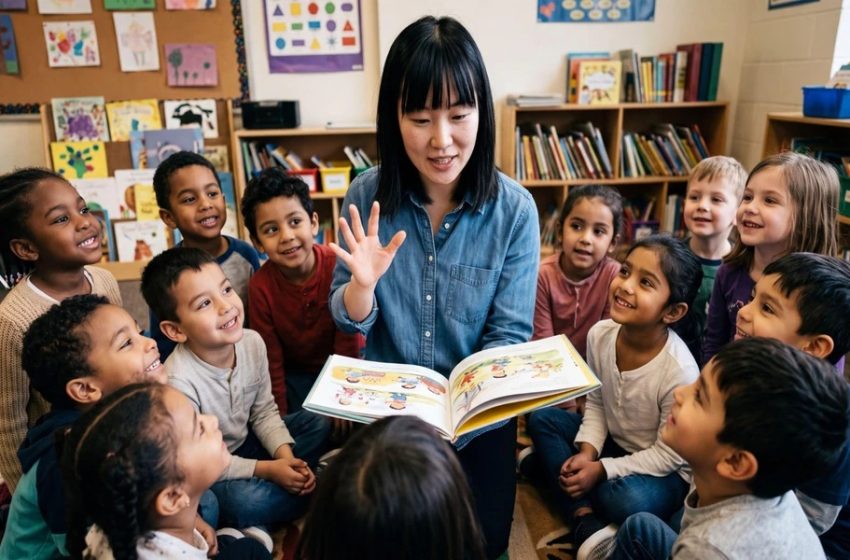
Watching a young child point at an illustration and name objects in Mandarin is a joyful experience for parents and educators, yet while spotting a dog or identifying colours shows strong vocabulary recall, moving from naming isolated objects to spontaneous conversation requires a structured cognitive bridge. Unlocking expressive Chinese for preschoolers involves guiding them on a step-by-step journey from simple visual identification and structured scene descriptions to lively, independent conversation, so let us explore how parents and educators can navigate this path to build lifelong language confidence.
Decoding the Visual: Moving Beyond Single-Word Labels
Visual stimuli naturally capture a young child’s imagination. Bright illustrations, storybook pages, and colourful flashcards provide immediate context, making visual prompts the ideal starting point for early language acquisition.
When introducing Chinese for preschoolers, many parents stop at simple labelling exercises. They ask, “What is this?” and accept one-word answers like “cat” or “car.” To build real conversational capacity, we must encourage children to expand their observations into descriptive phrases using colour, size, action, and spatial placement.
| Learning Stage | Typical Child Response | Encouraged Expanded Response | Target Skill Developed |
|---|---|---|---|
| Stage 1: Identification | “Dog!” (狗) | “A big brown dog.” (一只大棕狗) | Adjective and Noun Pairing |
| Stage 2: Action Spotting | “Running.” (跑) | “The dog is running in the park.” (小狗在公园里跑步) | Subject-Verb-Location Structure |
| Stage 3: Emotion / Context | “Happy.” (开心) | “The happy dog is playing ball.” (开心的小狗在玩球) | Expressive Narrative Flow |
| Stage 4: Open Dialogue | “I want a dog!” (我想养狗) | “I want a dog because they are cute.” (我想养狗,因为它们很可爱) | Personal Opinion Formation |
Connecting the Dots: Linking Actions into Creative Narratives
Once preschoolers master basic descriptive phrases, they need help linking those observations into a cohesive story. This stage transitions young learners from static image analysis to dynamic sequential thinking.
Instead of treating a picture as a frozen moment, guide your child to imagine what happened right before the scene and what will occur next. Ask open-ended questions like, “Why is the little boy crying?” or “Where do you think the family is going with their picnic basket?”
Encouraging children to invent backstories transforms rigid picture description into creative storytelling. This process trains their brains to retrieve vocabulary fluidly, connect ideas using logical conjunctions, and construct compound sentences effortlessly without relying on rigid scripts.
The Conversational Leap: Relating Pictures to Personal Experiences
True conversational fluency blooms when classroom illustrations are no longer static images but gateways to a child’s personal world. Realising Mandarin is a tool to share their own thoughts, feelings, daily routines, and humorous experiences can help preschoolers move beyond mere description into authentic communication.
To bridge the gap between book illustrations and real life, educators and parents should utilise personal connection questions. For instance, asking a child about their favourite ice cream flavour after viewing a picture of children at the beach, or discussing their own experiences on rainy days when seeing a character in a raincoat, encourages them to draw from their own lives. Through these prompts, children seamlessly transition from describing an external scene to expressing their own identity, opinions, and emotions in natural, spoken Mandarin.
Banishing Performance Anxiety with Playful Interaction
Preschoolers learn best when they forget they are participating in a formal lesson. Forcing a child to sit quietly and answer dry exam questions creates unnecessary performance anxiety that freezes natural speech.
At a Chinese tuition centre, instructors can transform speech practice into interactive play using puppets, drama, and role-play games. Pretend you are customers visiting a bakery depicted on a picture card, or act out the roles of zookeepers feeding animals. When adults create a joyful, non-judgmental environment, children express themselves freely without worrying about tonal slips or grammar errors. This effortless play builds the self-assurance required for fluid, everyday communication.
Empowering Your Little Linguist: A Journey to Conversational Confidence
Guiding a child from simple picture description to confident conversation requires patience, creative questioning, and consistent encouragement. By building upon visual prompts, prompting personal connections, and keeping learning playful, you empower your child to speak Mandarin naturally and expressively. Nurture these foundational skills today, and watch your preschooler grow into a confident bilingual communicator.
Frequently Asked Questions
Why is picture description so popular in early Mandarin teaching?
Picture description gives young children immediate visual clues, reducing cognitive overload. It helps them recall vocabulary quickly without relying on translation from their primary language.
How can I help my preschooler if they reply in English during Chinese practice?
Acknowledge their thought positively, then gently model the phrase back to them in Mandarin. Encourage them to repeat the sentence with you in a playful, supportive manner.
How long does it take for a preschooler to transition from naming objects to holding conversations?
Every child progresses at their own pace. With regular, interactive exposure through play and guided discussion, most children show significant conversational growth within six to twelve months.
Ready to help your child transition smoothly from simple words to confident, natural Mandarin conversations? Contact Hua Language Centre today to learn more.
